
Tool profile
Apache Subversion
Mirror of Apache Subversion. Contribute to apache/subversion development by creating an account on GitHub.
What is Apache Subversion?
Apache Subversion is a mature and stable choice for enterprise settings that need a centralized repository model. It stands out with features like atomic commits to maintain repository integrity, comprehensive authorization for per-directory and per-user access control, and efficient binary file handling. These capabilities make it straightforward to manage and control all project files in one place.
Because exact pricing details are not listed in the facts, check their official pricing page for current plans. The platform is available on the Web, and users looking for alternatives can choose from options like Tower, Git, Gitea, Perforce, and Mercurial SCM.
Features
Centralized Version Control
Apache Subversion (SVN) uses a centralized repository model, which makes it easy to manage and control all project files in one place. All history and versions are stored on the server, making backup and repository management straightforward.
Atomic Commits
Subversion ensures that commits are atomic operations. This means that either all changes in a commit are applied, or none are, helping to maintain the integrity of the repository.
Comprehensive Authorization
SVN offers fine-grained authentication and authorization models. It can integrate with various authentication systems and allows granular access control on a per-directory and per-user basis.
Binary File Handling
SVN handles binary files more efficiently compared to some other version control systems, reducing the size of repositories and improving performance when large files are committed.
Mature and Stable
SVN has been around since 2000 and is widely used in enterprise settings. It is stable, well-documented, and has a vast community for support.
Screenshots
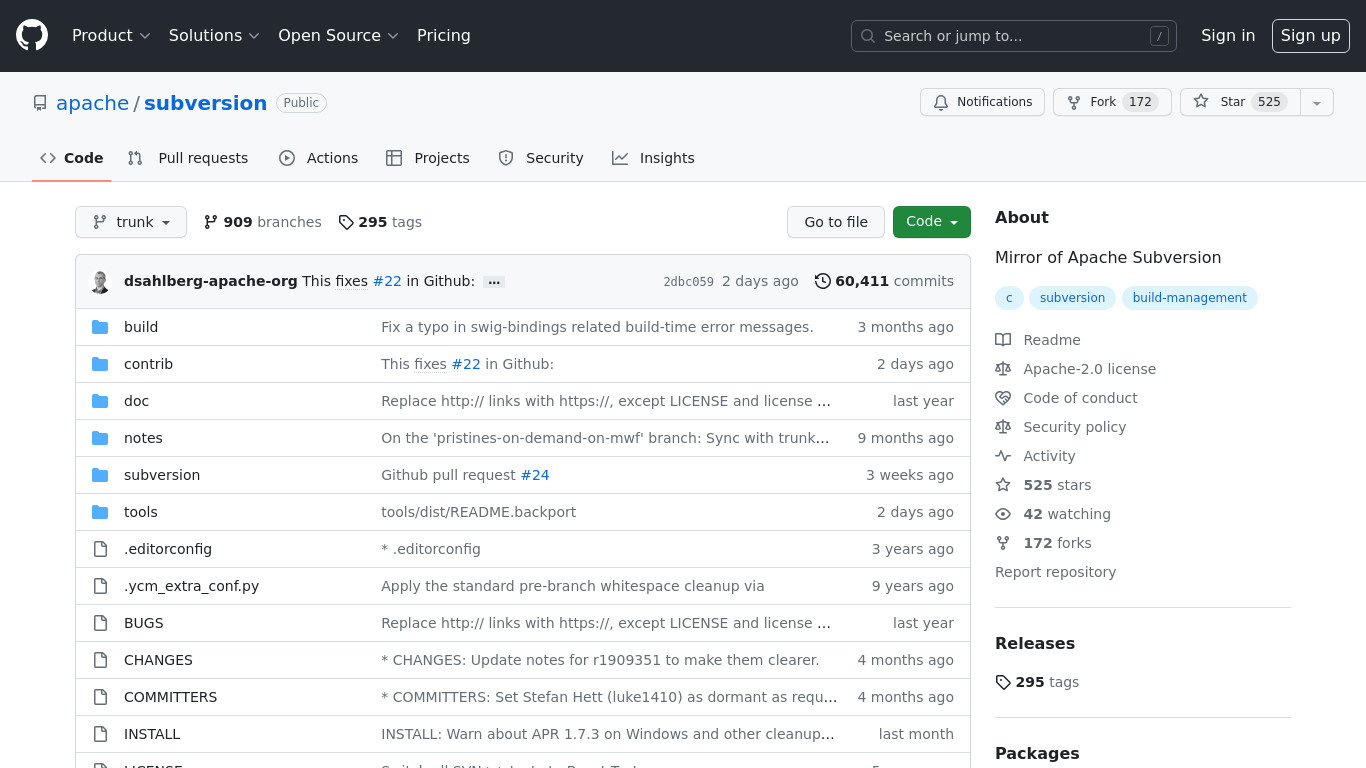
Apache Subversion vs. its alternatives
| Apache Subversion |  Tower |  Git |  Gitea |  Perforce | |
|---|---|---|---|---|---|
| Pricing | — | — | Open source | — | — |
| Platforms | |||||
| Listed features | 5 | — | 7 | 7 | — |
Frequently asked questions
How much does Apache Subversion cost?
Pricing details are not listed in the provided facts, so check their pricing page for current plans.
What is Apache Subversion used for?
Apache Subversion is used for code collaboration through a centralized version model that stores all history and versions on the server.
What platforms does Apache Subversion support?
Apache Subversion is available on the Web platform.
How does Apache Subversion handle binary files?
It handles binary files more efficiently than some other version control systems, which reduces repository size and improves performance during large file commits.
What are the best alternatives to Apache Subversion?
Known alternatives include Git, Gitea, and Tower, which you might prefer depending on your specific version control and collaboration needs.
What is the benefit of Atomic Commits in Apache Subversion?
Atomic commits ensure that either all changes in a commit are applied or none are, helping to maintain the integrity of the repository.
Alternatives to Apache Subversion
Read the full comparison →Git
Git is a free and open source version control system designed to handle everything from small to very large projects with speed and efficiency. It is easy to learn and lightweight with lighting fast performance that outclasses competitors.
Gitea
A painless self-hosted Git service


Gogs
A painless self-hosted Git service written in Go


GitHub Desktop
GitHub Desktop is a seamless way to contribute to projects on GitHub and GitHub Enterprise.