
Tool profile
Jenkins
Jenkins is an open-source continuous integration server with 300+ plugins to support all kinds of software development
What is Jenkins?
Jenkins is an open-source continuous integration server well-suited for implementing Continuous Integration and Continuous Deployment pipelines, facilitating automated build, test, and deployment processes. It provides flexibility in deployment by running on various platforms including Windows, macOS, and various Unix-like systems, and supports distributed builds using a Master-Slave architecture.
Users benefit from over 1,500 plugins that allow extensive customization, alongside an active community providing documentation and support. Because it is an open-source tool, users can modify, share, and use it without licensing fees, making it a strong fit for teams seeking adaptable, community-supported DevOps infrastructure.
Features
Open Source
Jenkins is an open-source tool, which means users can modify, share, and use it without licensing fees.
Large Plugin Ecosystem
Jenkins has a robust plugin ecosystem with over 1,500 plugins, allowing extensive customization and functionality to fit various DevOps needs.
Active Community
The active and large community of Jenkins users and developers provides extensive support, documentation, and shared solutions.
Platform Independent
Jenkins can run on various platforms including Windows, macOS, and various Unix-like systems, providing flexibility in deployment.
CI/CD Capabilities
Jenkins is well-suited for implementing Continuous Integration and Continuous Deployment (CI/CD) pipelines, facilitating automated build, test, and deployment processes.
Scalability
It supports distributed builds using Master-Slave architecture, enabling you to scale your build and deployment processes across multiple machines.
Extensible
Thanks to its plugin architecture, Jenkins can be extended to integrate with a variety of tools and services, making it highly adaptable.
Screenshots
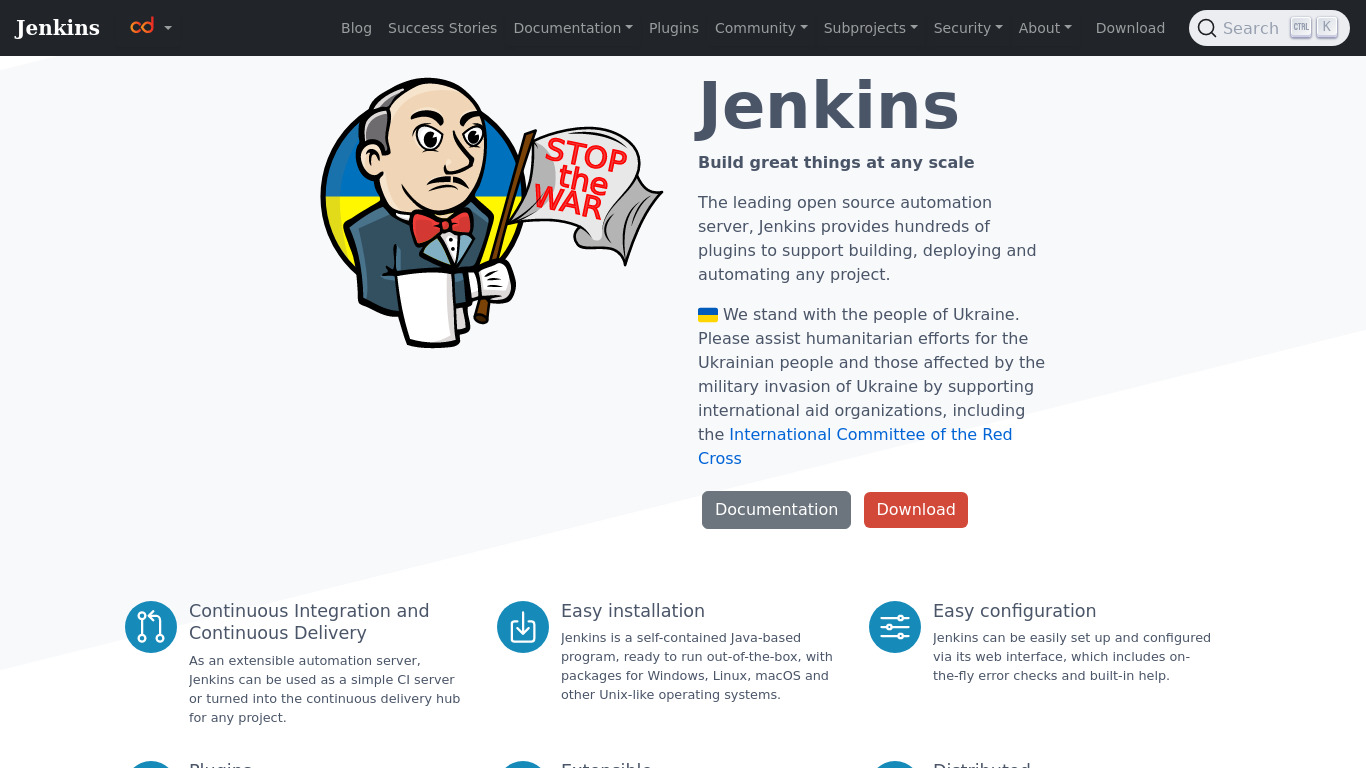
Jenkins vs. its alternatives




Frequently asked questions
How much does Jenkins cost?
Jenkins is an open-source tool, which means users can modify, share, and use it without licensing fees.
What is Jenkins used for?
Jenkins is used for implementing Continuous Integration and Continuous Deployment pipelines, facilitating automated build, test, and deployment processes.
What platforms does Jenkins run on?
Jenkins is platform independent and can run on various platforms including Windows, macOS, and various Unix-like systems.
How does Jenkins handle scalability?
Jenkins supports distributed builds using a Master-Slave architecture, enabling you to scale your build and deployment processes across multiple machines.
What is the Large Plugin Ecosystem feature?
Jenkins has a robust plugin ecosystem with over 1,500 plugins, allowing extensive customization and functionality to fit various DevOps needs.
What are the best alternatives to Jenkins?
Top alternatives to Jenkins include Semaphore, CircleCI, Travis CI, Buddy, and Codeship. You might prefer these alternatives depending on your specific CI/CD pipeline and hosting requirements.